Compressed natural gasFrom Wikipedia, the free encyclopedia


Compressed natural gas (CNG) is a fossil fuel substitute for gasoline (petrol), diesel, or propane/LPG. Although its combustion does produce greenhouse gases, it is a more environmentally clean alternative to those fuels, and it is much safer than other fuels in the event of a spill (natural gas is lighter than air, and disperses quickly when released). CNG may also be mixed with biogas, produced from landfills or wastewater, which doesn't increase the concentration of carbon in the atmosphere. CNG is made by compressing natural gas (which is mainly composed of methane [CH4]), to less than 1% of the volume it occupies at standard atmospheric pressure. It is stored and distributed in hard containers at a pressure of 200–248 bar (2900–3600 psi), usually in cylindrical or spherical shapes. CNG is used in traditional gasoline internal combustion engine cars that have been converted into bi-fuel vehicles (gasoline/CNG). Natural gas vehicles are increasingly used in the Asia-Pacific region, Latin America, Europe, and America due to rising gasoline prices. In response to high fuel prices and environmental concerns, CNG is starting to be used also in tuk-tuks and pickup trucks, transit and school buses, and trains. | 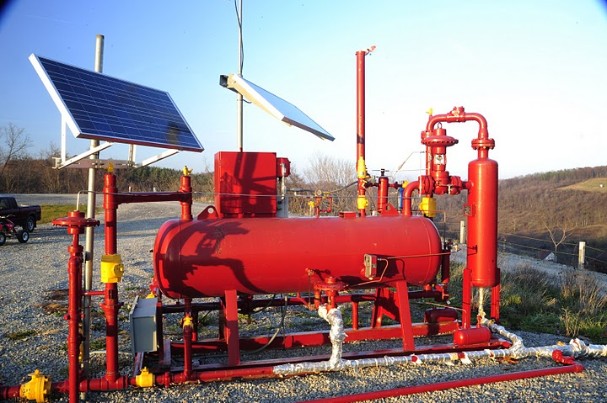
Compressed natural gas (CNG) is a fossil fuel substitute for gasoline (petrol), diesel, or propane/LPG. Although its combustion does produce greenhouse gases, it is a more environmentally clean alternative to those fuels, and it is much safer than other fuels in the event of a spill (natural gas is lighter than air, and disperses quickly when released). CNG may also be mixed with biogas, produced from landfills or wastewater, which doesn't increase the concentration of carbon in the atmosphere. CNG is made by compressing natural gas (which is mainly composed of methane [CH4]), to less than 1% of the volume it occupies at standard atmospheric pressure. It is stored and distributed in hard containers at a pressure of 200–248 bar (2900–3600 psi), usually in cylindrical or spherical shapes. CNG is used in traditional gasoline internal combustion engine cars that have been converted into bi-fuel vehicles (gasoline/CNG). Natural gas vehicles are increasingly used in the Asia-Pacific region, Latin America, Europe, and America due to rising gasoline prices. In response to high fuel prices and environmental concerns, CNG is starting to be used also in tuk-tuks and pickup trucks, transit and school buses, and trains. |
